
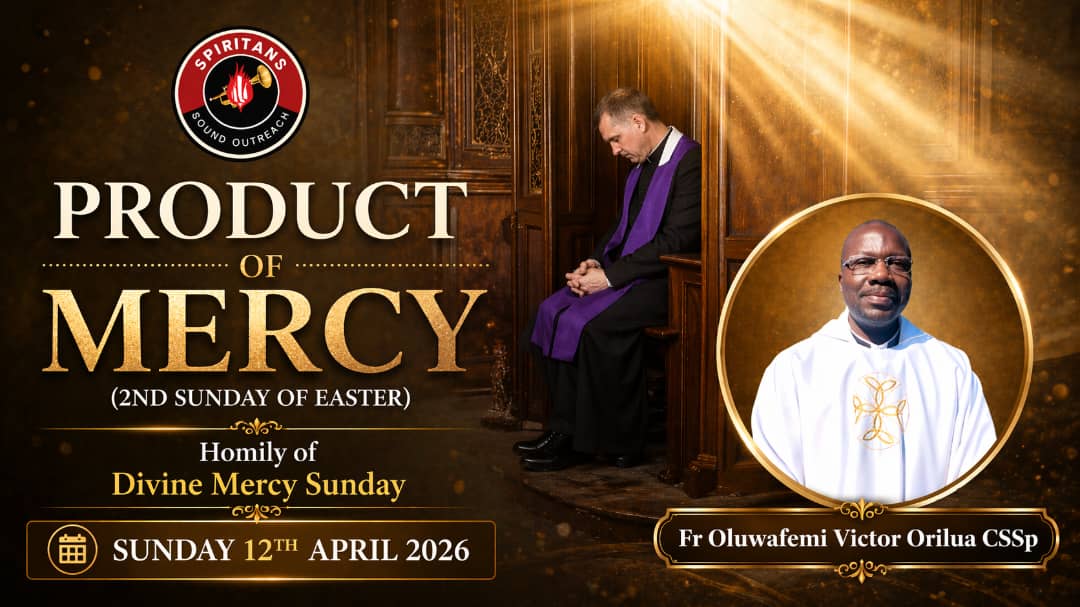
Products of Mercy
Acts 2:42-47, 1 Peter 1:3-9, John 20:19-31
Homily of Divine Mercy Sunday (2nd Sunday of Easter)
By Fr Oluwafemi Victor Orilua CSSp
Today we celebrate Divine Mercy Sunday, a day to reflect on the ministry of reconciliation entrusted by the Lord Jesus to the Church through the apostles. Empowered by the Holy Spirit, the Church stands in God’s place, reconciling people to Him. This remains her central mission: to carry God’s forgiveness to the world and to guide people toward true repentance.
“And when he had said this, he breathed on them and said, ‘Receive the Holy Spirit. If you forgive the sins of any, they are forgiven; if you withhold forgiveness, it is withheld.’”
When the Church drifts away from the theology of the Cross and focuses only on the gospel of prosperity, she risks neglecting this mission. When we say only what is pleasant and avoid teachings that challenge lives, we weaken Christ’s mandate. We must strike a balance. With the help of the Holy Spirit, we are called to proclaim God’s mercy, call His people to repentance, and assure them of forgiveness.
In the confessional, the priest is not a judge but a mediator between God and His people, communicating God’s mercy. He acts in the person of Christ and echoes God’s mercy in the words of absolution:
“God, the Father of mercies, through the death and resurrection of His Son, our Lord Jesus Christ, has reconciled the world to Himself and sent the Holy Spirit for the forgiveness of sins. Through the ministry of the Church, may God grant you pardon and peace, and I absolve you from your sins in the name of the Father, and of the Son, and of the Holy Spirit. Amen.”
The mystery of confession does not depend on the priest’s personal discretion but on the Holy Spirit working through him. That is why he is not burdened by what he hears and continues to relate normally with the penitent-he himself is a product of mercy.
However, the mission of reconciliation is not limited to priests. It belongs to all who share in the life, death, and resurrection of Christ through baptism. Each of us is called to reconcile others to Christ-not only in words, but also through our actions. This is where the works of mercy come in:
Corporal Works of Mercy
- Feed the hungry
- Give drink to the thirsty
- Clothe the naked
- Shelter the homeless
- Visit the sick
- Visit the imprisoned
- Bury the dead
Spiritual Works of Mercy
- Instruct the ignorant
- Counsel the doubtful
- Admonish the sinner
- Bear wrongs patiently
- Forgive offences willingly
- Comfort the afflicted
- Pray for the living and the dead
The works of mercy are our shared responsibilities. Hence, as priests and lay, it is our responsibilities to bring others to Christ, through our words, lives, and works. May we always be channels of God’s mercy. Amen.
Join the Conversation
No comments yet. Be the first to share your thoughts!